
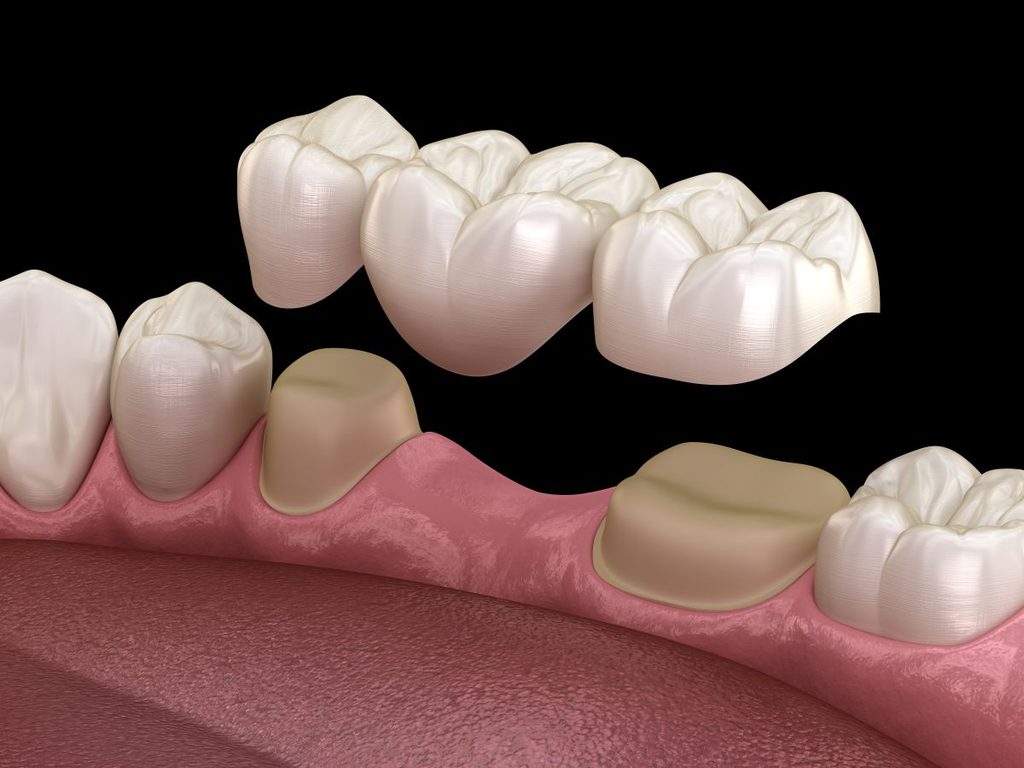
If you’ve ever heard that children’s song “London Bridge is Falling Down” you already know that bridges can and do fail. But what about dental bridges? These restorations can replace up to four consecutive missing teeth in one durable, lifelike prosthesis, but if you don’t take excellent care of them, they can’t provide the protection your smile needs. Here’s a closer look at some steps you can take to ensure your dental bridge avoids failure and stays in great shape for years to come.
What Are Dental Bridges?
Dental bridges are prosthetic teeth that are designed to close gaps in the mouth created by missing teeth, by connecting to two healthy abutment teeth and “bridging” the gap between them. This creates the appearance of a full arch, all the while restoring your ability to eat, speak, and smile.
Why Do Dental Bridges Fail?
Unfortunately, while they can replace multiple teeth for year, dental bridges aren’t permanent solutions. In fact, even the most well-maintained prosthetic should only last between five and seven years. However, they can sometimes fail much sooner if you don’t take excellent care of them.
With a dental bridge, although they aren’t real teeth, it is essential that you brush and floss them and your remaining natural teeth daily. That’s because your natural ones (including the abutments) can still get cavities and decay, and your mouth is also still susceptible to gum disease.
Another reason bridges may fail is due to breakage, which can sometimes occur if you eat something too hard or crunchy or if the restoration itself extends too far. Basically, the longer the bridge, the greater the risk of it breaking while eating.
Danger Ahead: Signs of a Failing Bridge
The best way to determine if your dental bridge is failing is to have it examined by a dentist. Because the abutment teeth are covered with the prosthetic, it can be hard to tell if it has become decayed; however, should you notice any signs of trouble such as pain when chewing, swollen or receding gums, or if the restoration has broken or come loose, be sure to notify your dentist at once.
How to Prevent Dental Bridge Failure
To prevent your dental bridge from failure, be sure to maintain your normal oral hygiene routine of brushing twice a day, flossing daily, and visiting your dentist twice a year for your regular exams and cleanings. Furthermore, it is important to avoid using your it for anything other than chewing food, and to limit your consumption of hard, crunchy things that could accidentally break it.
Remember, your dental bridge is a strong, natural-looking way to replace multiple consecutive teeth on an arch, but to make the most of it, you’ll need to take proper care of it. In the meantime, should you notice any warning signs of immanent failure, call your dentist right away to get your beautiful, healthy smile back on track!
About Our Practice
At Westchester Gentle Dentistry, Dr. Alidadi and Dr. Pellegrini are pleased to offer a wide range of tooth replacement options, including durable, lifelike dental bridges. Whether you’d like to replace multiple consecutive teeth, or it’s time to upgrade your current restoration, we’re here to help close those unsightly gaps in your arches and give you back your gorgeous, healthy grin. To learn more about dental bridges, visit our website or call us at 914-289-0672 to schedule a consultation.